
The McLaut network: our own autonomous system, internet exchanges, and 25 years in Cherkasy
AS25133, eight internet exchanges, points of presence in Kyiv, Frankfurt and Warsaw. Here is what actually holds up the network our data center sits on.
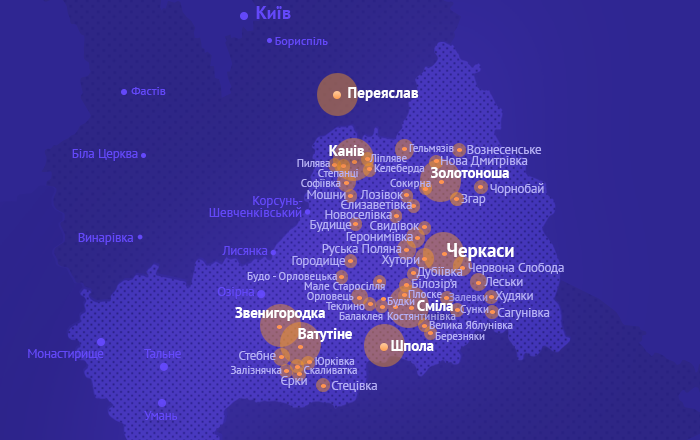
When we say a server at McLaut Colocation sits “inside the ISP network,” that is not a marketing phrase. McLaut runs its own autonomous system, has its own points of presence abroad, and deals directly with transit carriers. Here is what that is made of.
25 years on air
The McLaut network has operated in Cherkasy since 2001. Over that time it grew from a city ISP into an operator serving Cherkasy, Smila, Zolotonosha, Kaniv, Korsun-Shevchenkivskyi, Pereiaslav and more than a hundred other towns and villages — 147 settlements in total.
Residential and business internet is a separate service from McLaut Colocation, but physically it is the same backbone: the server in our data center connects to the same network that McLaut subscribers use every day.
Its own autonomous system
The network operates as AS25133, registered with RIPE on 1 August 2002 to the legal entity LLC “McLaut-Invest.” That means McLaut controls the routing of its own traffic instead of leasing someone else’s IP space.
Traffic reaches the wider internet through three transit carriers — RETN, Cogent and Hurricane Electric — and exchanges directly with hundreds of other networks. All address blocks are RPKI-signed, which protects against a mistaken or malicious announcement of someone else’s addresses.
Where the network is physically present
McLaut connects to eight internet exchanges in Ukraine and Europe with ports of up to 40 Gbps:
| Internet exchange | Port |
|---|---|
| 1-IX EU (Poland) | 40 Gbps |
| RUDAKI-IX (Ukraine) | 40 Gbps |
| DTEL-IX (Ukraine) | 30 Gbps |
| Giganet IXN (Ukraine) | 30 Gbps |
| DE-CIX Frankfurt (Germany) | 20 Gbps |
| AMS-IX (Netherlands) | 10–20 Gbps |
| UA-IX (Ukraine) | 10 Gbps |
| Equinix Warsaw (Poland) | 10 Gbps |
Beyond the exchanges themselves, McLaut keeps its own points of presence in Kyiv, Frankfurt and Warsaw. That gives it a short path to European networks and keeps it independent of any single route or carrier.
Backup power for the network itself
A network only stays up if the communication infrastructure underneath it does. Since autumn 2024 McLaut has been moving nodes to passive optical networks that need no intermediate power in buildings, and installing generators and batteries at the nodes themselves, sized for several days of autonomous operation during outages.
For the data center this means one thing: the backbone your server sits on has its own plan for a long power outage, just like our site does.
What this means for your server at McLaut Colocation
A server in a McLaut Colocation rack is not “connected to the internet somewhere” — it sits on the same AS25133 backbone that thousands of subscribers in Cherkasy use every day. Traffic to them never leaves the network, which is why McLaut network customers get priority for placement.
An eight-exchange footprint and its own points of presence in Europe also mean the route to other countries does not depend on a single transit provider.
More on the site’s infrastructure is on the Infrastructure page.
Sources: registry data from bgp.he.net, bgp.tools and PeeringDB for network AS25133, the UA-IX member profile at ix.net.ua, and a September 2024 report by Pro Vse on McLaut’s move to passive optical networks. Exchange and peering counts change over time.

